Sanofi: a product design journey into hemophilia treatment
I spent a year and a half working within an agile product team at the Sanofi Accelerator, dedicated to digital experiences for hemophilia treatments. As the product designer, I was responsible for the full design of two medicine brands: the hemophilia A treatment ALTUVIIIO and the hemophilia B treatment Alprolix.
For each brand, I designed both a patient-facing website and a healthcare professional (HCP) website.
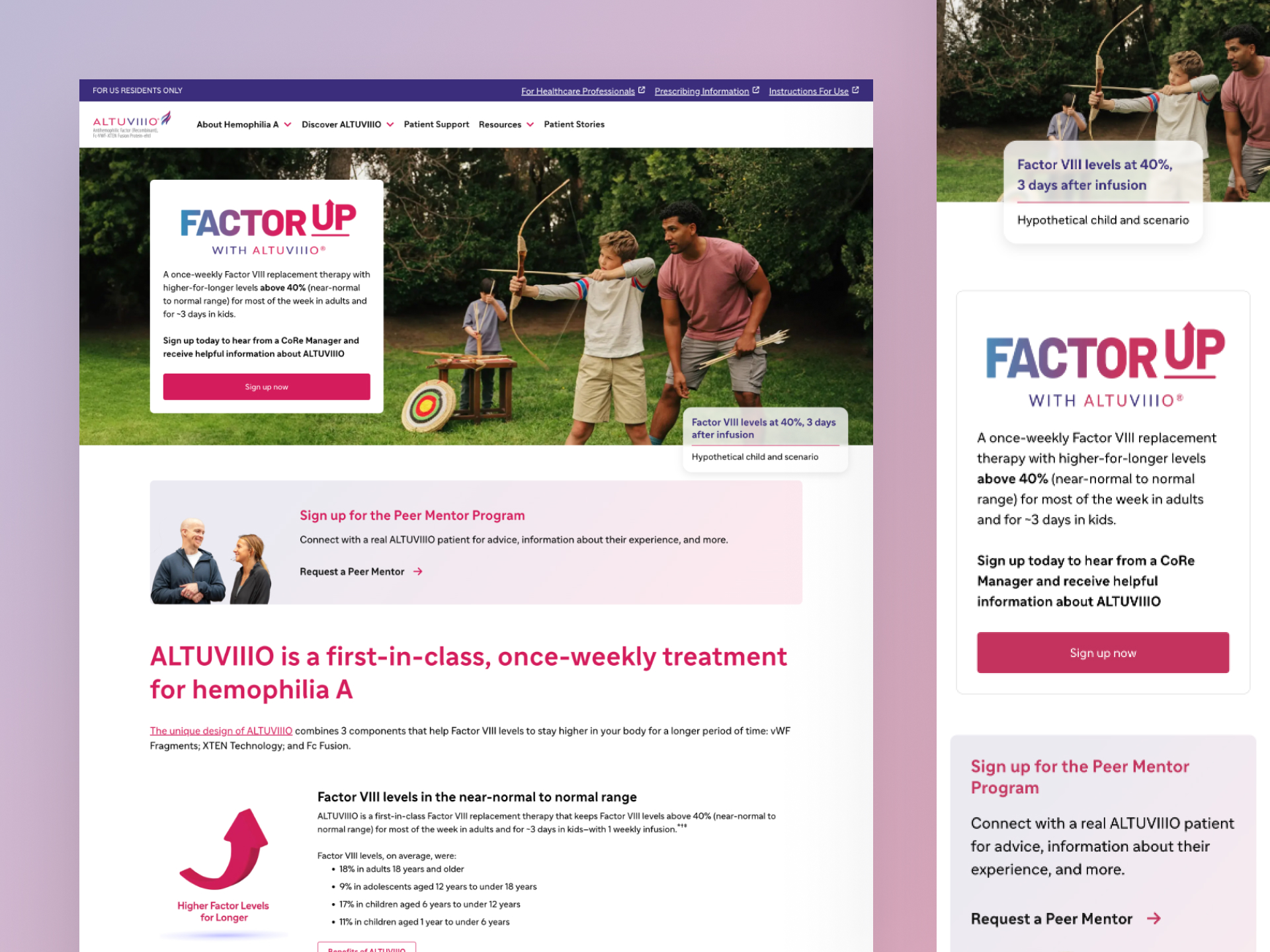
ALTUVIIIO
ALTUVIIIO was my first end-to-end project as a solo designer, running over one year. The brand originally had a standalone website before migrating to Sanofi’s ecosystem.
I coordinated weekly with:
- a content agency to align copy and UI,
- the ALTUVIIIO brand team for validation,
- the Sanofi Elements design system team to ensure cross-brand consistency.
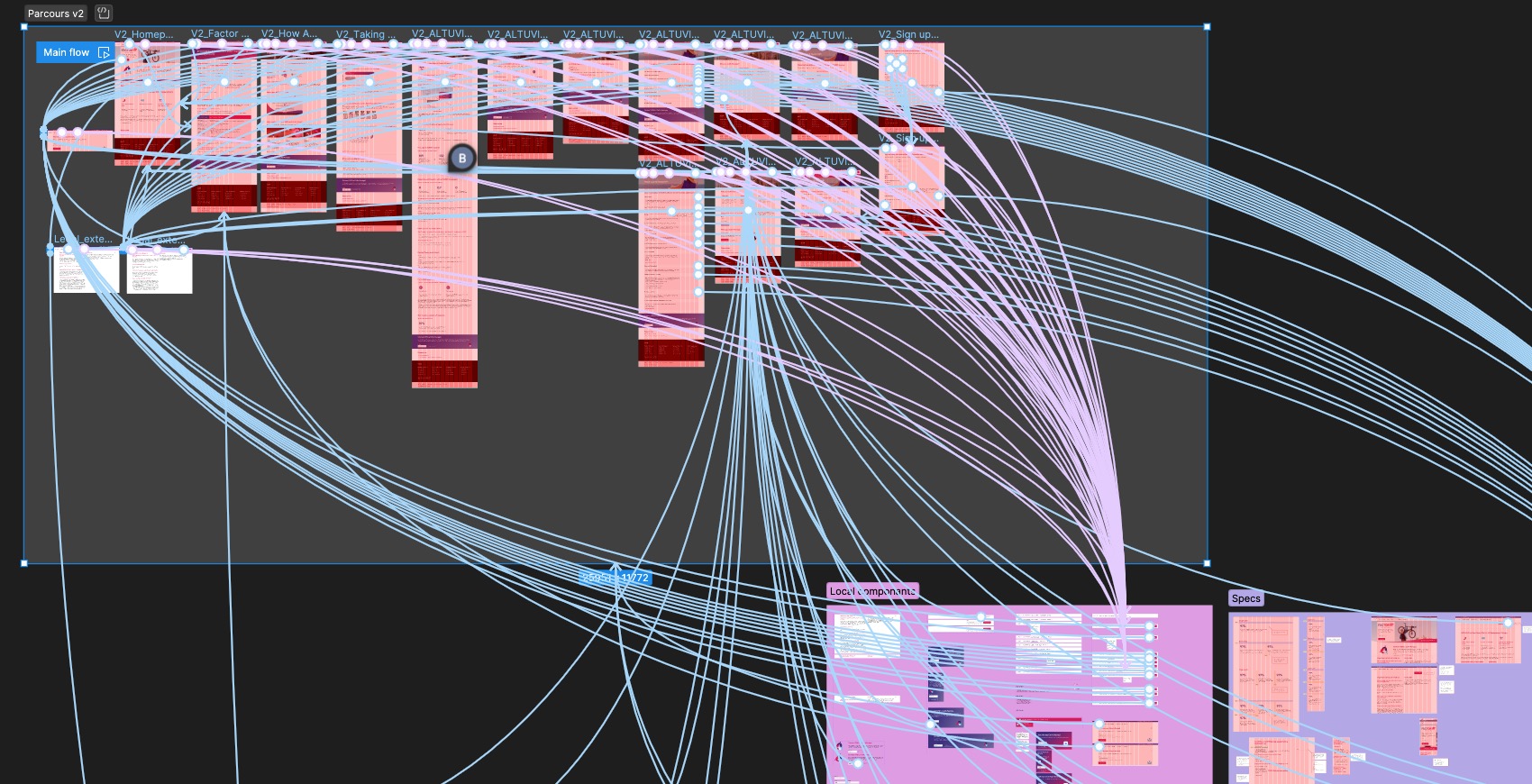
Working closely with the design system team, I participated in weekly workshops to identify shared component needs across medicine brands and prioritize updates to the Sanofi Elements design system.
Design goals
The ALTUVIIIO patient website aimed to:
- help patients understand the disease and treatment,
- build reassurance through resources and patient stories,
- increase conversion toward treatment initiation.
Success metric
Our primary KPI was form completion, allowing patients to start treatment and be connected with a mentor for support throughout their journey.
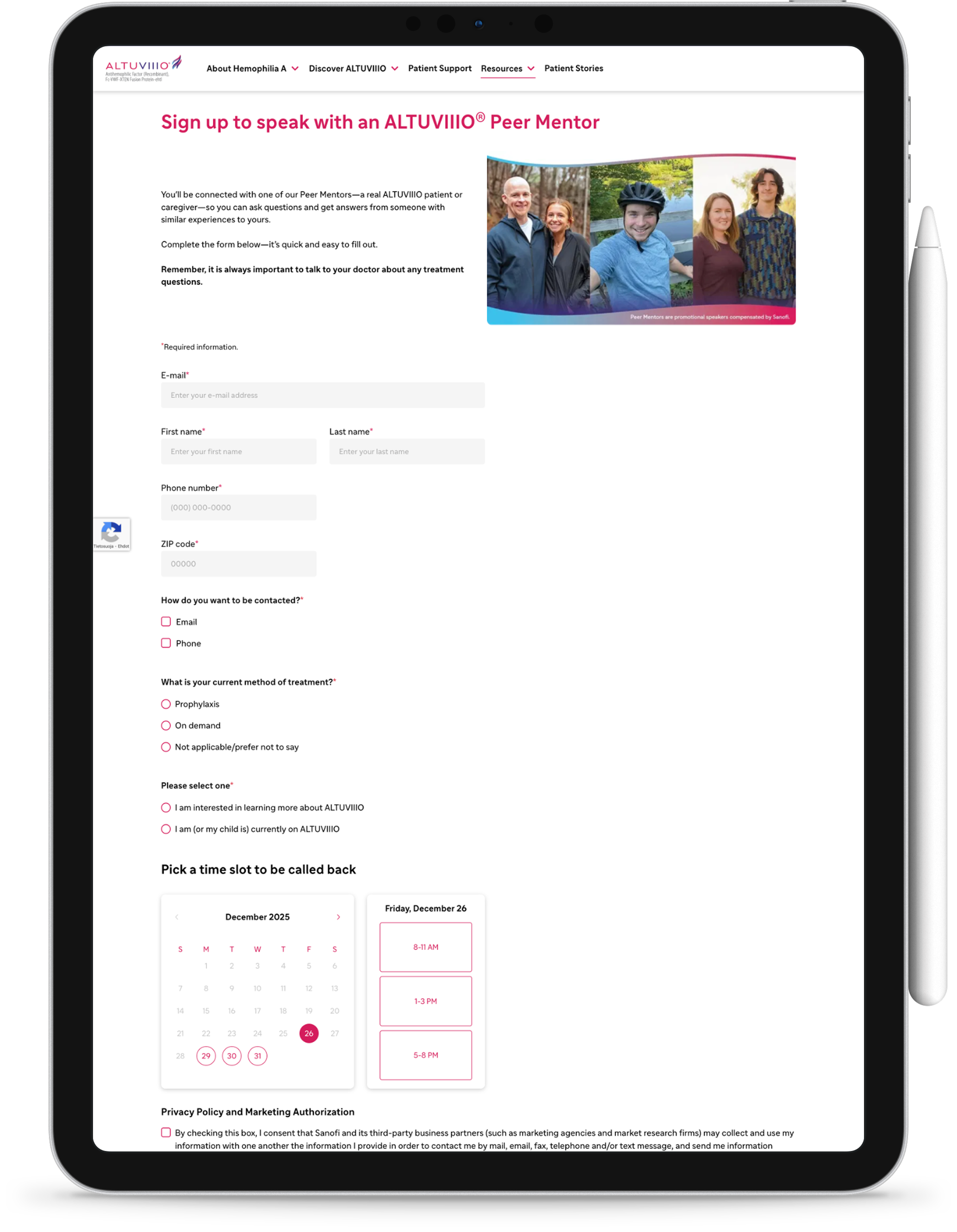
Main design challenge
Managing a tri-party workflow (Sanofi ↔ content agency ↔ brand team) while working with a still-maturing design system required constant adaptation and component-level negotiation across multiple projects.
HCP website
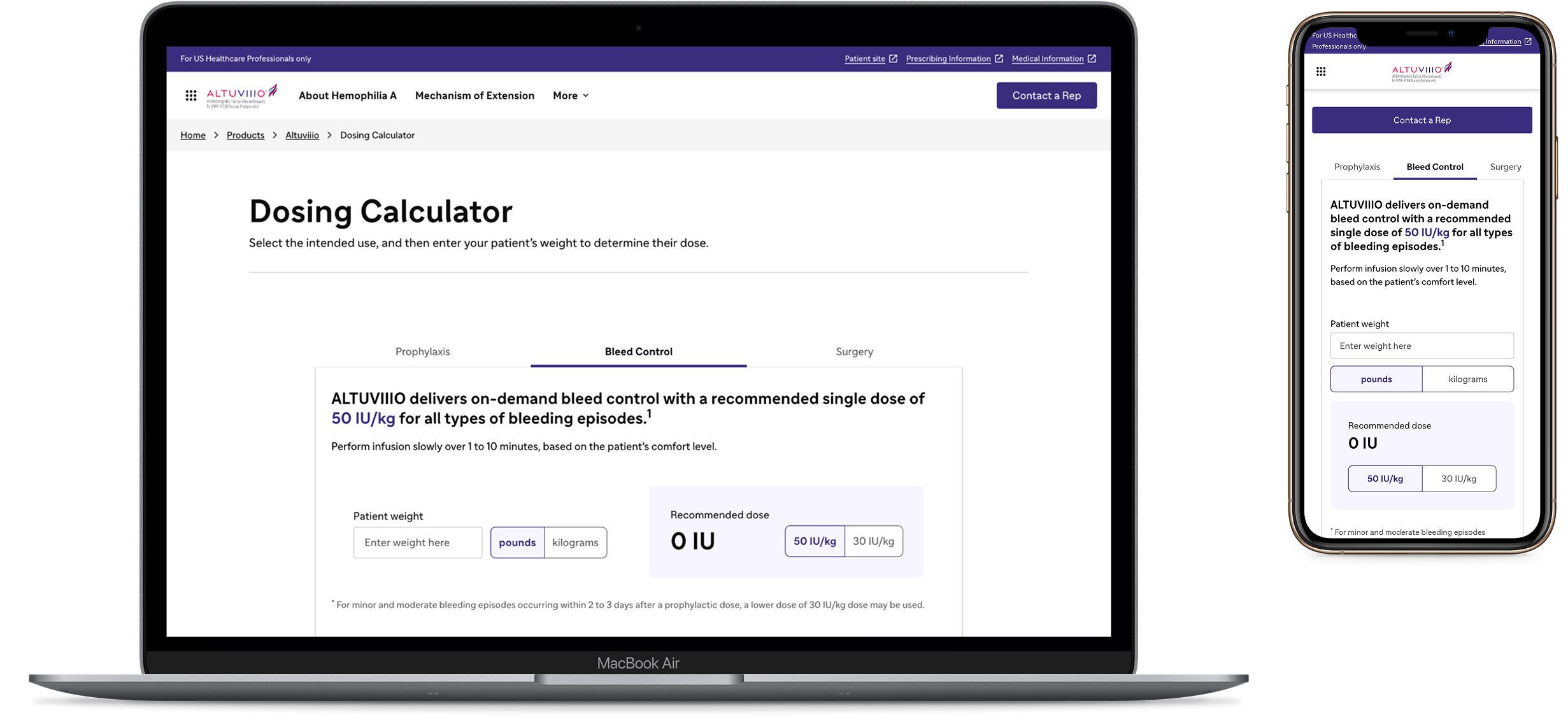
In parallel, I designed the Healthcare Professional version of the ALTUVIIIO site, integrated into Sanofi Campus+, a platform for medical resources.
This project required adapting the content to an existing CMS with rigid components, leaving limited layout flexibility.
Despite this constraint, I designed a dosing calculator tool enabling doctors to quickly determine treatment dosage based on patient criteria.
Alprolix
This second project spanned six months and involved creating a new website for the hemophilia B treatment Alprolix.
With fewer stakeholders (only Sanofi Accelerator and the brand team), we had significantly more design freedom.
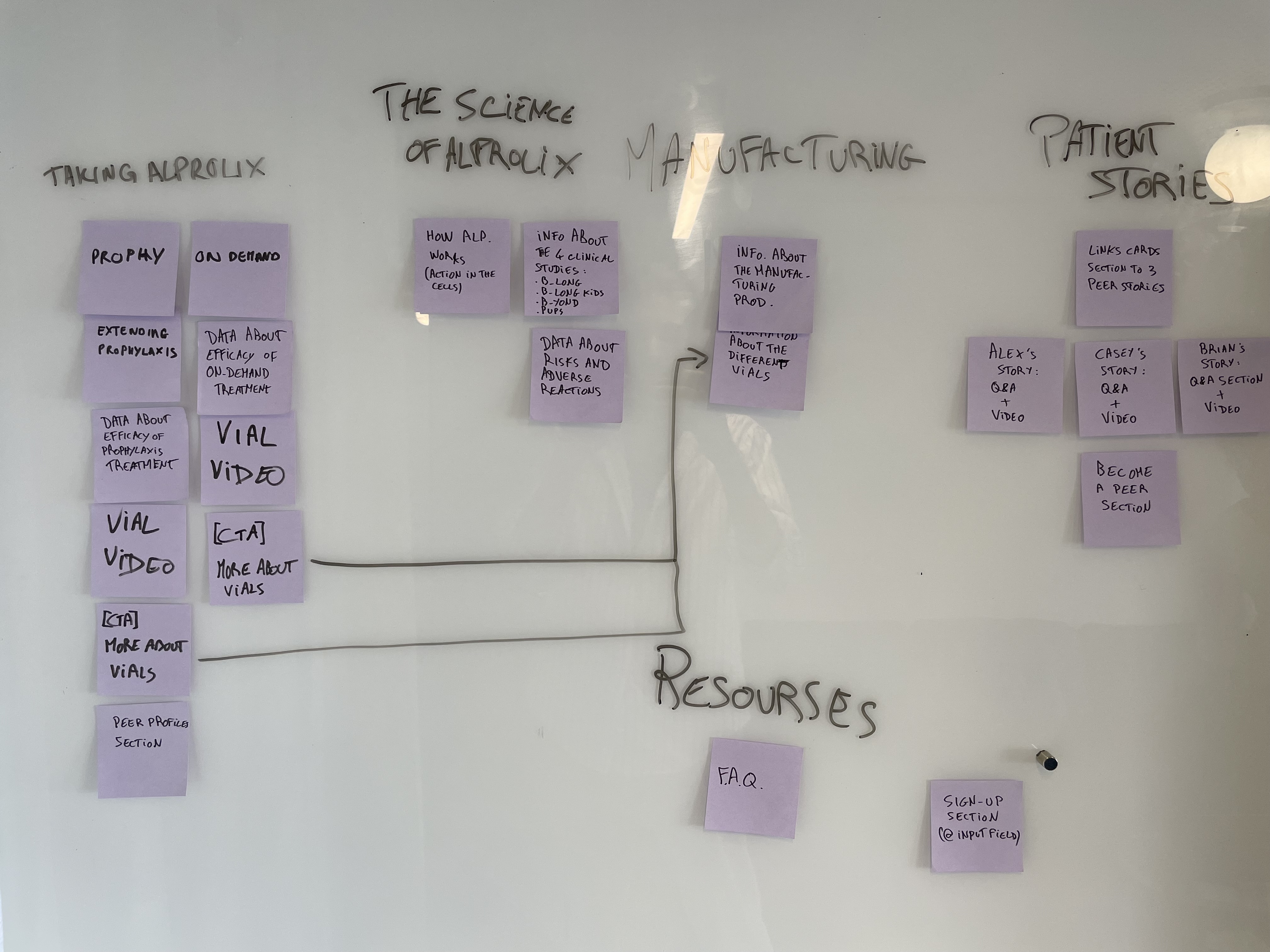
The first step was defining an optimized navigation structure based on available content.
Slices
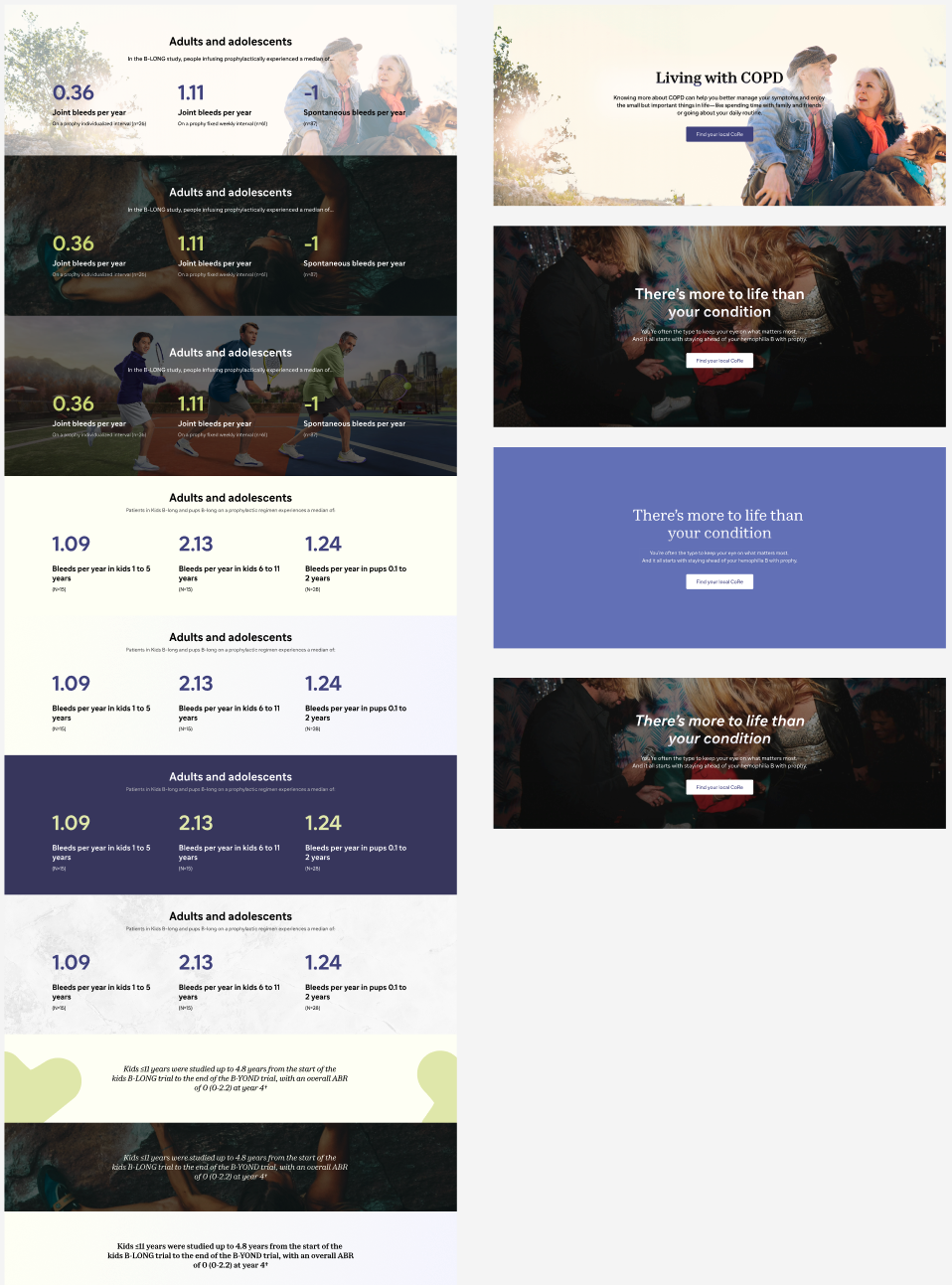
Starting with Alprolix, and in collaboration with the Sanofi Elements team, we redesigned the system for better cross-project scalability by introducing customizable “slices” — modular page sections and subsections enabling brand and marketing teams to autonomously create or update content.
Form redesign
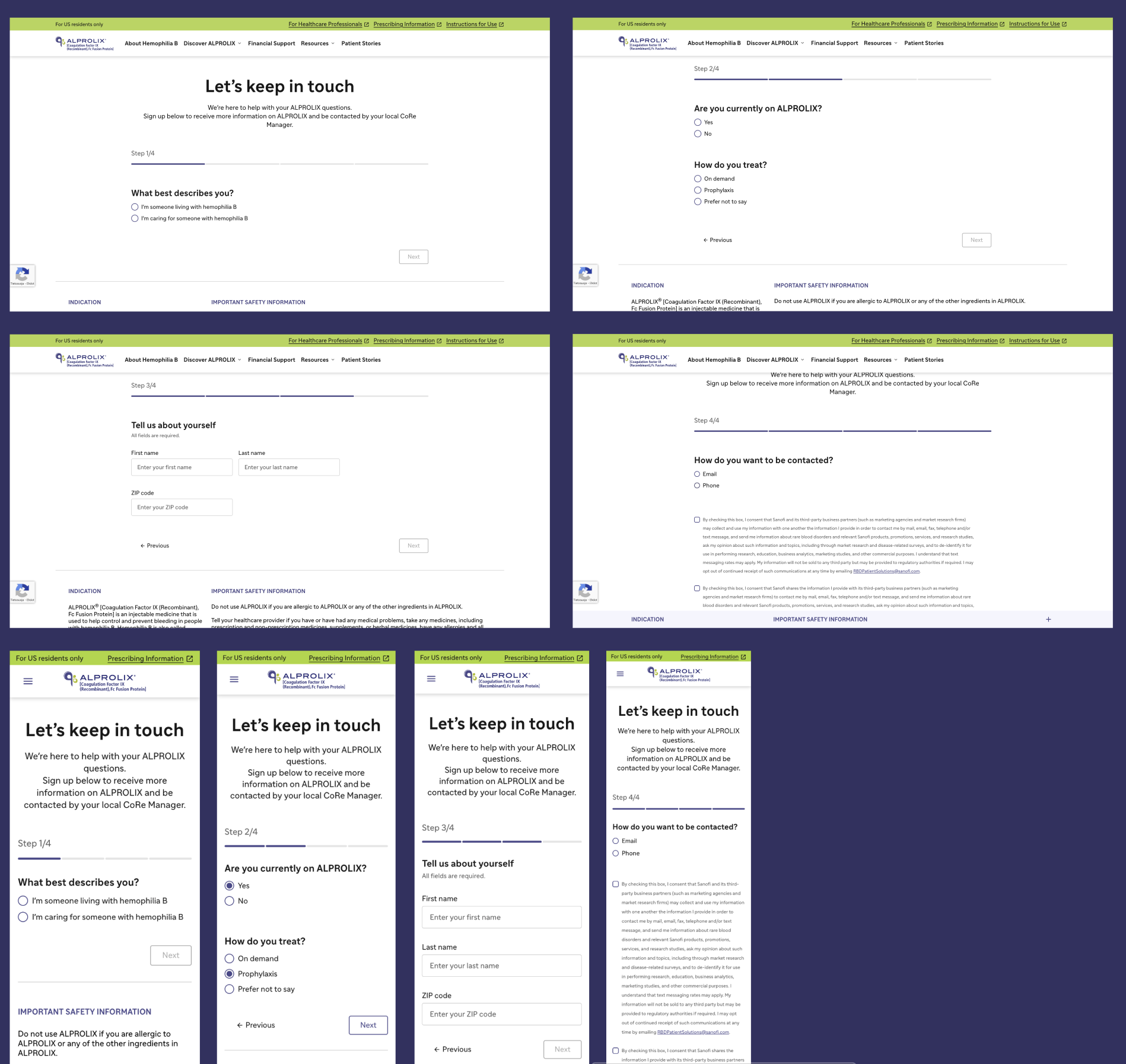
We analyzed single-page vs. multi-step forms and redesigned the contact form as a 4-step flow, reducing cognitive load and drop-off rates.
This new pattern became a scalable template for all Sanofi product websites, with configurable steps and questions.
Learnings
Working on ALTUVIIIO and Alprolix taught me how to design user-centered digital products within one of the most rigidly regulated environments in tech: the pharmaceutical industry. Beyond UX and UI, every page, sentence, and layout had to comply with strict medical, legal, and regulatory rules. In the US, this meant that all content had to go through PRB (Promotional Review Board) review — a mandatory, multi-step validation involving medical reviewers, legal teams, and regulatory specialists.
This process was rarely linear: each release required several rounds of copy and layout adjustments to meet compliance.
Throughout these projects, I strengthened a few essential skills:
- Designing within strict regulatory and technical constraints
Taking medical, legal, and compliance requirements into account directly in UX and UI decisions. - Structuring information architecture with SEO and content strategy in mind
Building clear navigation and content hierarchies that support both user understanding and discoverability. - Collaborating effectively across teams
Working smoothly with brand teams, content agencies, regulatory teams, SEO experts, developers, and the design-system team. - Building scalable design solutions
Creating reusable templates and components (like slices and multi-step form patterns) to improve consistency and reduce delivery time across brands.
Overall, this work helped me develop a design approach that balances user needs, regulatory constraints, content strategy, and scalability — which is essential when building reliable digital products in healthcare or any other regulated industry.